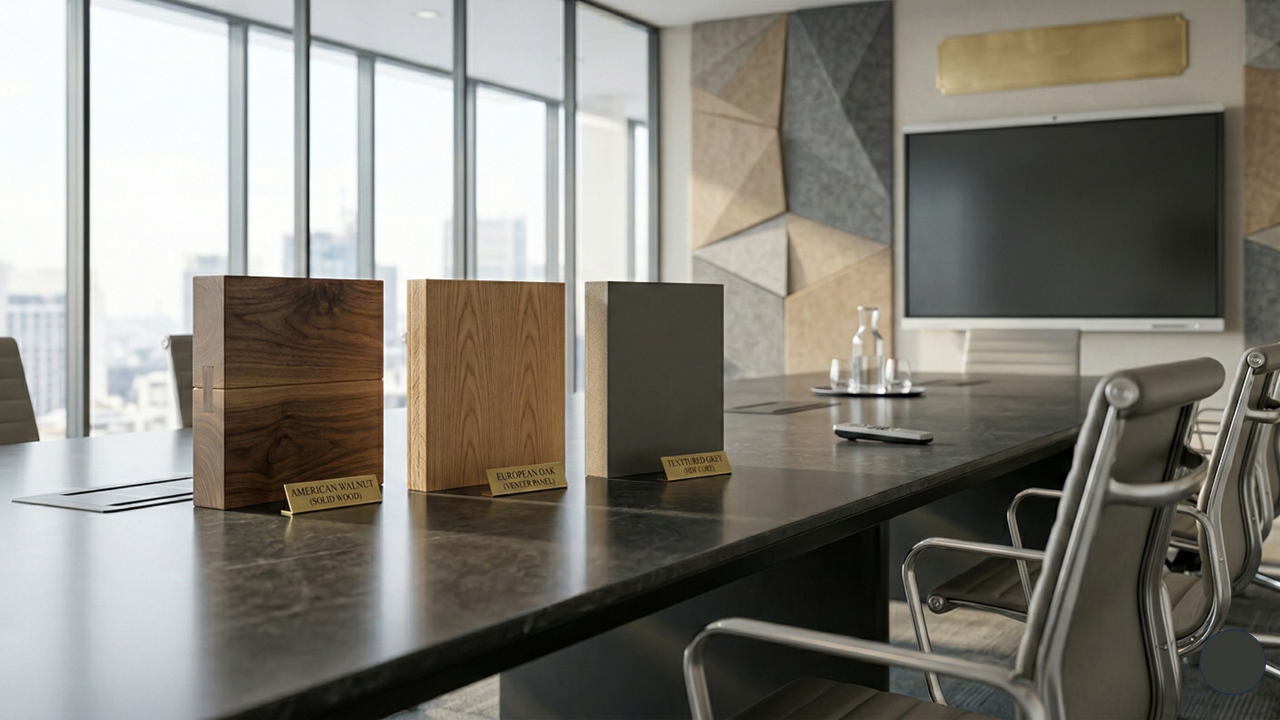
In the world of high-end interior design and architectural planning, the choice of material is not merely an aesthetic decision; it is a structural and financial commitment. For professionals sourcing imported furniture for luxury hotels, commercial developments, or premium residential projects, understanding the technical nuances between Solid Wood, Wood Veneer, and Engineered Wood is essential to ensuring project longevity and client satisfaction.
This guide serves as a technical deep-dive into these materials, designed to assist architects and designers in making informed specifications for their next large-scale venture.
Solid Wood: The Heirloom Standard of Luxury
Solid wood refers to furniture crafted entirely from natural timber harvested from single logs. In the luxury segment, hardwoods like American Walnut, European Oak, Teak, and Ash are the primary choices for their density and expressive grain patterns.
- Structural Integrity: Unlike composite materials, solid wood possesses a homogeneous structure. This allows for intricate carvings, dovetail joinery, and heavy-duty load-bearing, making it the gold standard for hospitality furniture like dining tables and bed frames.
- The Patina Factor: One of the unique selling points for interior designers is the material’s ability to age. High-quality solid wood develops a “patina” over decades, increasing the furniture’s character and value.
- Refinishability: Solid wood can be sanded and refinished multiple times. For hotel owners, this represents a lower lifecycle cost, as furniture can be restored to its original glory after years of heavy guest use without requiring replacement.
Feel the Difference. Request a material sample kit to experience our quality firsthand.
Wood Veneer: The Architect’s Canvas for Precision
A common misconception is that veneer is “lesser” than solid wood. In professional furniture sourcing, high-end wood veneer is often a deliberate choice for its stability and aesthetic versatility. It consists of a thin slice of natural hardwood (typically 0.6mm to 3mm) bonded to a stable core like high-grade plywood or MDF.
- Dimensional Stability: Solid wood is “alive”—it expands and contracts with humidity. In large-scale projects, such as wall paneling or expansive boardroom tables, wood veneer is superior because its cross-layered core prevents warping and splitting in fluctuating climates.
- Aesthetic Matching: Veneer allows for Book-matching and Slip-matching. This level of grain continuity is impossible to achieve with solid timber slabs, making veneer the preferred material for seamless, high-end architectural finishes.
- Sustainability: One log of walnut can produce hundreds of veneer sheets, making it a more eco-conscious choice for FSC-certified projects where exotic wood aesthetics are required without the heavy environmental footprint.
Engineered Wood: The Invisible Performance Driver
For real estate developers and commercial interior designers, engineered wood (including Plywood, HDF, and MDF) is the backbone of functional interiors. When sourcing imported furniture, the quality of the “invisible” material is what determines the durability of the final piece.
- High-Traffic Durability: In hotel room interiors, wardrobes and cabinetry often utilize engineered wood with a laminate or veneer finish. This provides a surface that is resistant to scratches and moisture, far outperforming solid wood in humid environments like bathrooms or coastal resorts.
- Precision Engineering: Man-made boards are free from natural defects like knots or sapwood, allowing for high-precision CNC cutting and modular assembly—crucial for large-scale developments where consistency across hundreds of units is mandatory.
Technical Comparison Matrix for Specifications
| Feature | Solid Wood | Wood Veneer | Engineered Wood |
|---|---|---|---|
| Longevity | 50+ years (Generation-led) | 15–30 years (Quality dependent) | 10–20 years (Standard use) |
| Moisture Resistance | Moderate (Prone to warping) | High (Stable core) | Very High (If MR/BWP Grade) |
| Design Flexibility | Carvings & Heavy Joinery | Matching Patterns & Curves | Modular & Flat-surface |
| Maintenance | Regular Polishing/Sanding | Easy (Light cleaning) | Low (High resistance) |
The Roop Exim Verdict
Choosing between these materials is not about finding the “best” wood, but the most suitable material for the application context. For high-impact statement pieces in a luxury lobby, Solid Wood is unparalleled. For large-scale wall installations or cabinetry where grain consistency is vital, Wood Veneer is the professional’s choice. For the internal carcass of high-utility modular furniture, Engineered Wood provides the required stability and cost-efficiency.
At Roop Exim, we bridge the gap between global manufacturers and your design vision, ensuring that the materials specified are of the highest architectural grade, sourced directly from the finest factories in China and Turkey.
Explore Projects featuring our stunning solid wood and veneer furniture.
WhatsApp: +91 83209 62583 | Email: sales@roopexim.com | Web: www.roopexim.com